Advancing the science of animal welfare quantification
The Welfare Footprint Institute advances the science, methods, and tools to quantify animal welfare through a biologically meaningful and comparable metric: the time animals spend in negative and positive affective states of different intensities.
As the scientific steward of the Welfare Footprint Framework, we bring together expertise across disciplines, identify evidence gaps and research priorities. Through rigorous research, transparent methods, accessible tools, and training, we enable better-informed decisions and more effective use of resources to improve animals’ lives.

Featured publications
View all publications →- Journal Article2026Frontiers in Animal Science
The pain echo chamber: how barren environments amplify pain in captive animals
Read paper →- Frontiers in Animal Science
- Pain
- Captive animals
- Journal Article2025Nature Food
The Welfare Footprint Framework can help balance animal welfare with other food system priorities
Read paper →- Nature Food
- Framework
- Food systems
- Journal Article2025Scientific Reports
Quantifying the welfare impact of air asphyxia in rainbow trout slaughter for policy and practice
Read paper →- Scientific Reports
- Fish welfare
- Slaughter
- Technical Paper2023Welfare Footprint Institute
Simultaneous affective experiences and potential for positive welfare
Read paper →- Welfare Footprint Institute
- Positive welfare
- Affect
What is a Welfare Footprint?
A Welfare Footprint estimates the cumulative time animals spend in positive and negative affective states of different intensities.
Each estimate brings together three dimensions: Intensity — how unpleasant or pleasant an experience is; Duration — how long the experience lasts; Prevalence and Occurrence — how many animals experience it and how often.
The framework can assess a single welfare challenge, compare interventions, or capture welfare impacts across an animal's life or an entire production chain. Results can be expressed per animal, per kilogram of product, per person, per dollar spent, or using another decision-relevant unit.
Every estimate documents the evidence, assumptions, uncertainties, and analytical choices on which it depends.
Applications across domains
Welfare Footprints translate evidence about animals' affective experiences into comparable estimates of welfare impact. This makes it possible to answer practical questions about which problems cause the most harm, which changes produce the greatest gains, and where limited resources can do the most good.
Research & Prioritization
Compare interventions by the welfare improvement they produce—and, where relevant, by the improvement achieved per dollar spent.
Industry & Standards
Identify and communicate measurable welfare gains, allowing meaningful improvements to receive recognition and market value.
Policy & Economic Analysis
Incorporate animal welfare into regulations, impact assessments, cost-effectiveness analyses, and other formal decision processes.
Sustainability and Retail
Evaluate welfare impacts across production systems, practices, species, locations, and supply chains—and consider them alongside cost and environmental outcomes.
Welfare analyses by species
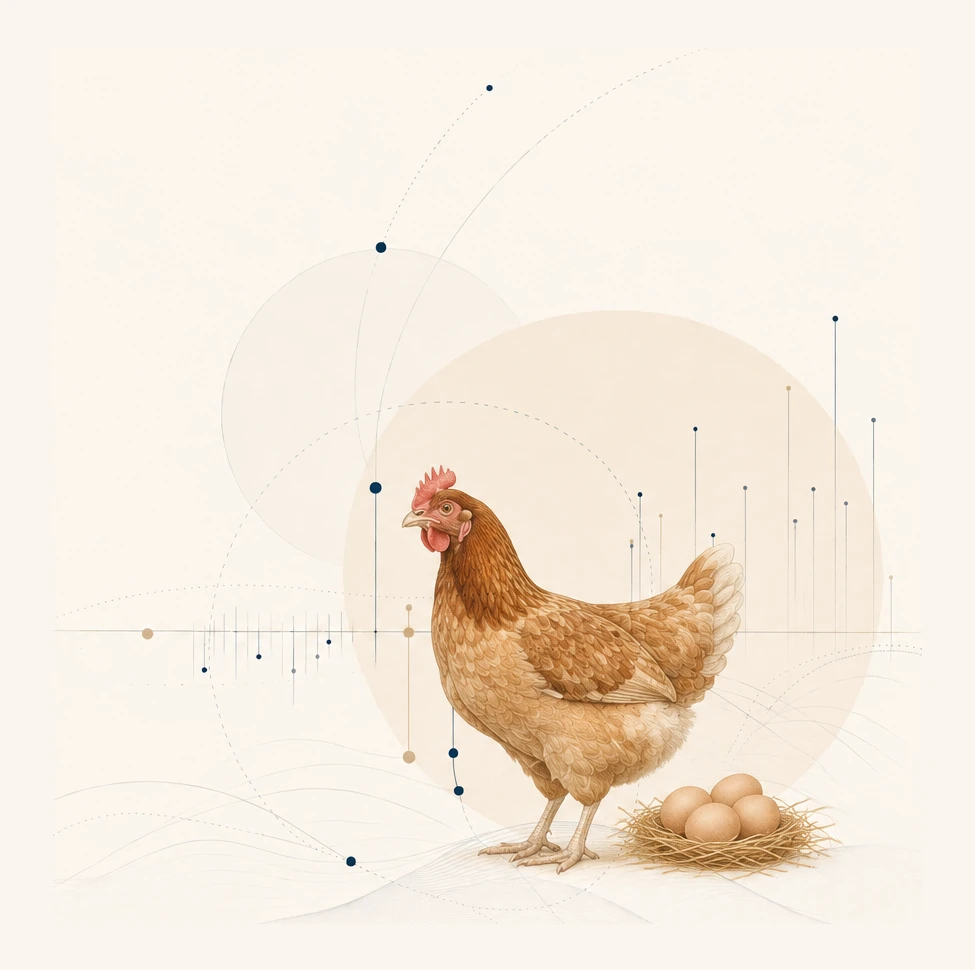
Laying hens · 3 analyses
The first full Welfare Footprint of an animal-sourced food
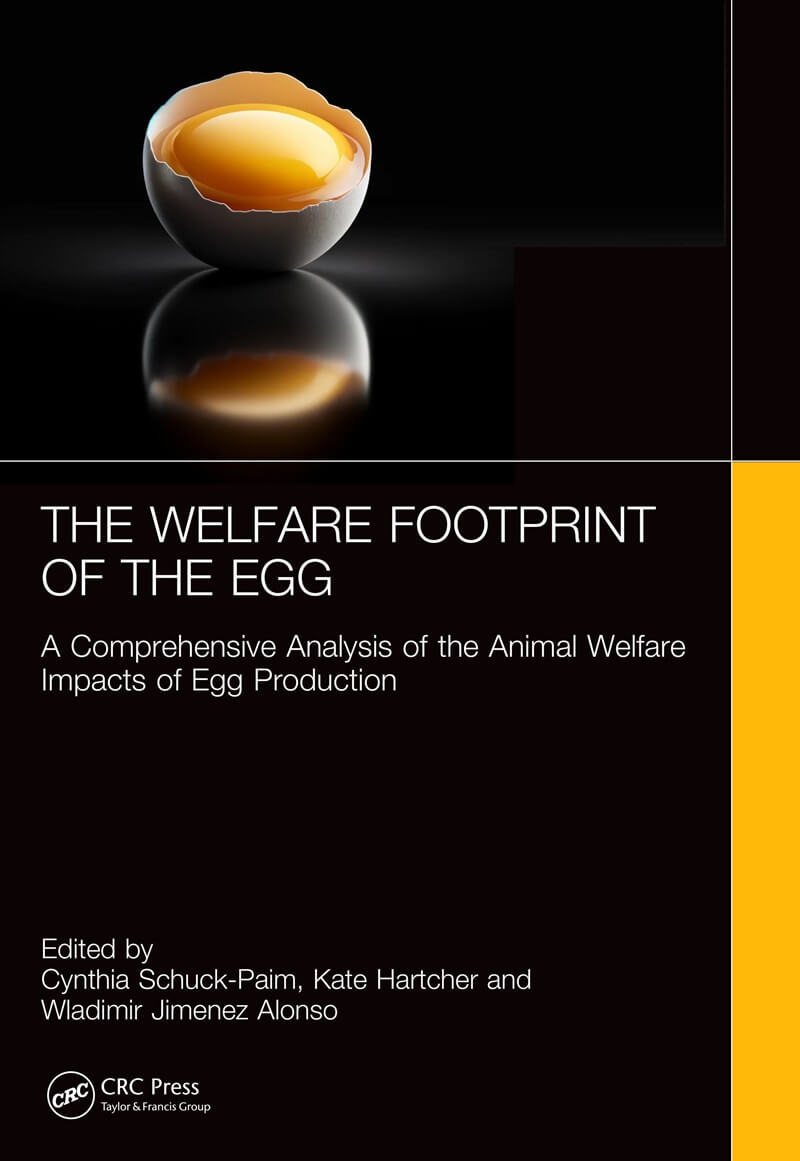
Quantifying the welfare impact of the transition to indoor cage-free housing systems
Laying hen mortality in different indoor housing systems: a meta-analysis of data from commercial farms in 16 countries
A growing research community
researchers across more than 50 institutions in 20+ countries.
affective experiences investigated and quantified.
researchers, professionals, and students reached through WFF training.
organisations applying or exploring Welfare Footprints.
Bringing welfare footprint analysis to a wider audience.
WFI is developing the WFF Companion and a suite of AI-assisted tools to help researchers, practitioners, and funders frame welfare questions, examine projects and interventions, map causal pathways, identify evidence gaps, and develop preliminary welfare estimates.
These tools support exploration and first-pass analysis. Validated estimates are developed separately through documented evidence review, quality checks, and scrutiny of scientific evidence.
Explore All AI-Assisted ToolsUse the WFF Companion to explore how the Framework can inform a welfare question, project, or funding decision and identify the appropriate analytical approach, concepts, and next steps.
Use Zootechnical Mapper and AffectMap to identify the Circumstances animals experience and trace how these can lead to Biological Consequences and Affective Experiences.
Use Hedonic-Track and Epidemiological Review to investigate the intensity and duration of Affective Experiences and the prevalence of the associated Biological Consequences.
Use Interspecific Scaling to investigate how differences between species may influence their capacity to experience positive and negative affective states.