The Welfare Footprint of the Egg
A Milestone in Animal Welfare Science: The Welfare Footprint of the Egg and the ISAE 2025 Workshop
On August 4th, 2025, during the 58th International Society for Applied Ethology (ISAE) Congress in Utrecht, the Welfare Footprint Institute will host a full-day (10:00-16:00) satellite workshop titled “The Science of Welfare Footprinting: The Welfare Footprint of the Egg.” This event marks a milestone in the evolution of animal welfare science—bringing together the launch of a new scientific tool and the publication of its first major application.
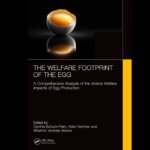
At the center of this event is The Welfare Footprint of the Egg, a forthcoming volume co-edited by Cynthia Schuck-Paim, Kate Hartcher, and Wladimir J. Alonso, and published by CRC Press (Taylor & Francis Group). This book is the first comprehensive application of the Welfare Footprint Framework to an entire animal production system. It represents the culmination of the collaborative work involving over 60 experts in welfare science, poultry welfare, epidemiology, veterinary science, and data analysis.
The central aim of this book is to quantify what egg-laying hens and other animals involved in the egg production chain actually experience over the course of their lives—and to do so in a way that is scientifically rigorous, transparent, and comparable. In doing so, the Welfare Footprint Framework breaks new ground by directly measuring what matters most to the animals themselves: their affective experiences. This is done through systematic assessment of how long and how intensely animals experience states such as pain, fear, discomfort, or—on the other end of the spectrum—relief and pleasure.
The book covers the entire egg production chain, including commercial laying hens, breeding flocks, culled chicks, and animals lost to disease or injury. It integrates epidemiological data on the prevalence of welfare conditions, expert-driven classification of pain intensities, and system-level modeling to calculate cumulative welfare impacts. These impacts are expressed using biologically meaningful metrics: the total time animals spend in affective states, positive and negative, of varying intensities. These results are then standardized per unit of product, allowing for direct comparison across production systems, including caged and cage-free systems.
Beyond its immediate findings, The Welfare Footprint of the Egg lays the foundation for how animal welfare is assessed and communicated. It is the first in a planned series of volumes applying the same methodology to other animal production systems, such as broiler chickens, pigs, and farmed fish. Its publication signals a new phase for considering animal welfare in multiple contexts—one that brings together biological realism, analytical rigor, and practical relevance for decision-making in policy, industry, advocacy, and consumer behavior.
The upcoming workshop at ISAE 2025 is planned to be both intellectually engaging and practically applicable, guiding participants through the core concepts of the Welfare Footprint Framework, showcasing tools for analyzing affective experiences, and offerign space for collaborative initiatives.
To learn more about the event and how to register, please visit the ISAE 2025 Website. You can register only for the sattelite workshop (cost is 30 euros, which covers lunch and coffee breaks), or the full conference, check out the full programme!